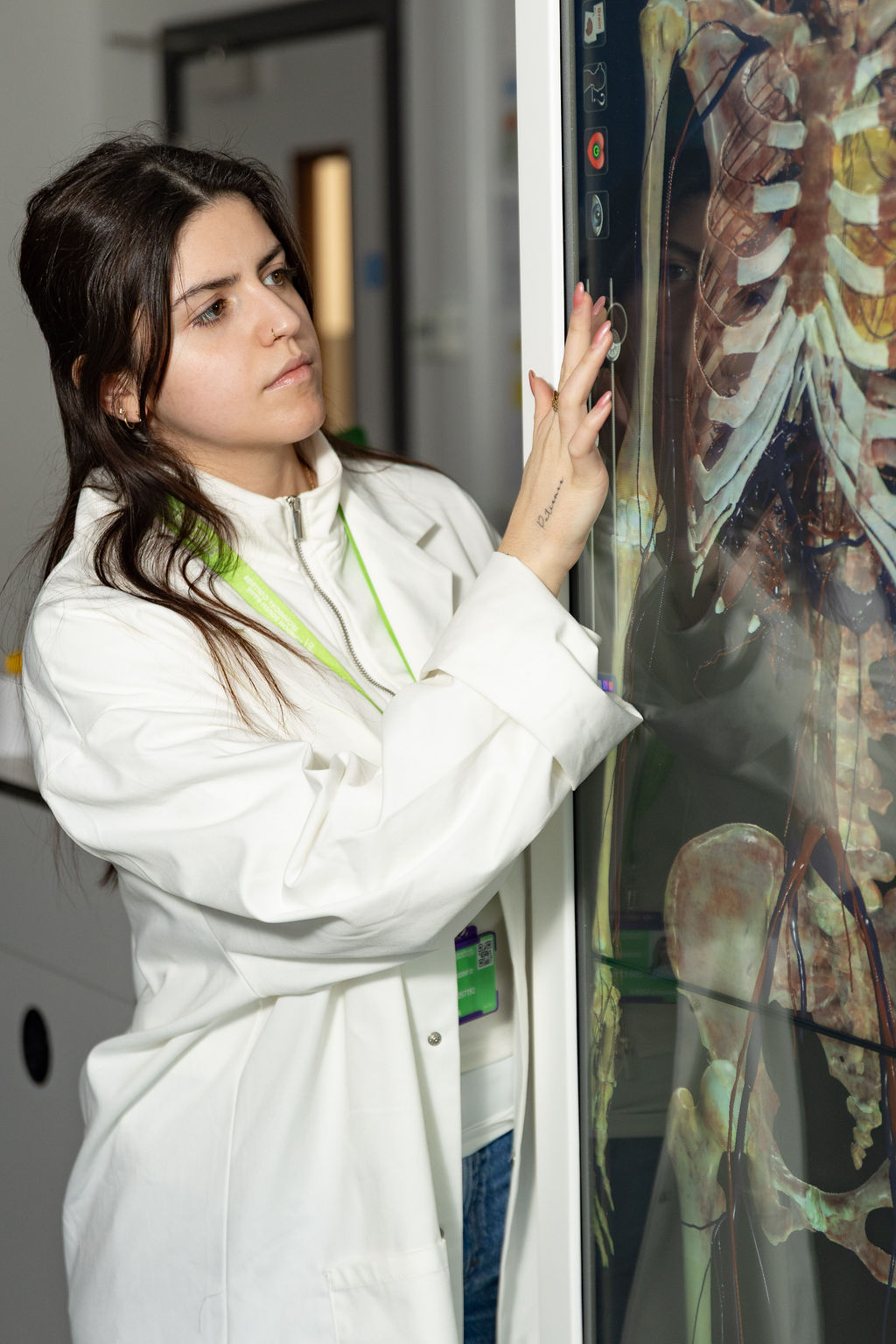
Students explored the people, skills and opportunities behind careers in science, technology, engineering and mathematics yesterday, Tuesday 6 October 2026, at London South Bank Technical College’s Nine Elms campus.
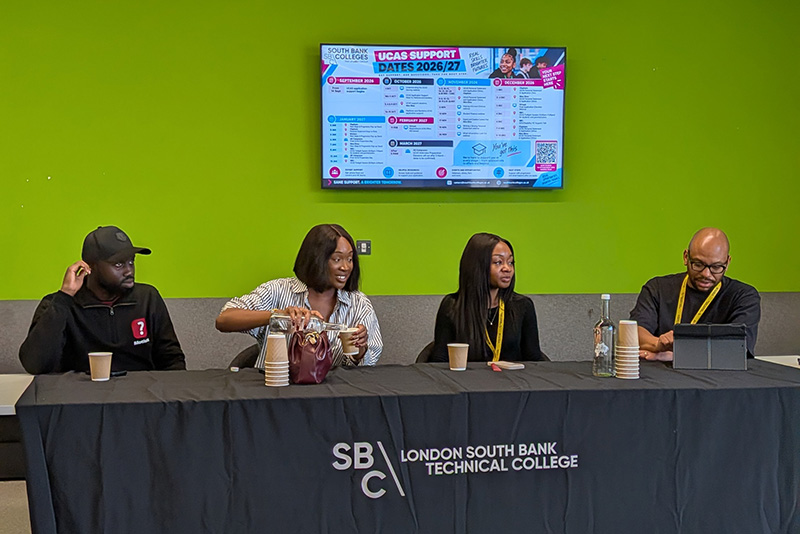
The Race in STEM: Identity, careers & belonging panel brought together professionals from race engineering, bioscience and technology for an open discussion about working life, changing direction and finding a place in industries where representation matters.
Organised by South Bank Colleges’ Marisa Ferguson, the event was moderated by Steven Fuller, Founder and Director of Race in STEM. Joining him were Deborah Ojutalayo, a Research Scientist at AviadoBio; George Imafidon MBE, CEO of Motivez and a race engineer; and Karen Emelu, Founder of Black Girls in Tech.
Behind the scenes of a racing team
George shared a memorable moment from his career: receiving an email from Lewis Hamilton about joining his electric racing team and initially wondering whether it was spam.
He explained the work behind a race, from studying previous performance data and planning for track and weather conditions to making decisions during the event and analysing the results afterwards.
For students interested in motorsport, his message was that the industry offers far more than a place in the driver’s seat. Teams need people in engineering, technology, marketing, project management and logistics, with different routes into employment, including apprenticeships and degrees.
George also discussed the financial barriers facing aspiring drivers and the importance of making other opportunities within the sport more visible. His own journey, from fixing bicycles and go-karting to studying mechanical engineering, showed how interests can develop into a career over time.
What a bioscience career can look like
Deborah gave students an insight into her work in gene therapy research, developing potential treatments for conditions affecting the brain and nervous system.
She described testing potential therapies in cell models before they reach clinical trials. Alongside laboratory work, her role involves analysing data, writing reports, discussing findings and keeping up with new research.
Her career began with an interest in science at school, followed by a biomedical science degree and a master’s in immunology. Enjoying her final-year research project helped her identify the direction she wanted to take.
Deborah highlighted the variety of opportunities across life sciences, including biotechnology, pharmaceutical companies, university research, scientific communications and clinical trials. She encouraged students to ask professionals about their daily work and explore different roles before deciding on a path.
Finding a route into technology
Karen spoke openly about changing direction during her studies. Her journey took her through software engineering and biology before she graduated in data analytics, while a graphic design business helped her discover an interest in web and product design.
She went on to build businesses, work in consulting and develop an AI health technology start-up. She founded Black Girls in Tech after noticing how few Black women she saw represented in the sector.
Karen challenged the idea that every technology career requires advanced coding skills. She explained that the sector includes a wide range of roles and that skills developed elsewhere can help people move into it. The discussion also considered AI and the importance of understanding how it could be used within different areas of work.
Asking questions and building confidence
Throughout the panel, students were encouraged to take part, ask questions and build relationships with people working in their areas of interest.
Steven’s own journey from music into education and recruitment added another example of how careers can change. He explained that Race in STEM was created to provide a community where people from different backgrounds could feel seen, heard and appreciated.
The speakers’ practical advice included making the most of college opportunities, working towards strong grades, staying open to change and being willing to tackle difficult tasks. George also reminded students that their lives and priorities extend beyond the subjects they study.
South Bank Colleges thanks Steven, Deborah, George and Karen for sharing their experiences, and Marisa Ferguson for organising the event. The panel gave students the chance to hear directly from professionals and explore how their own interests and skills could shape a future in STEM.